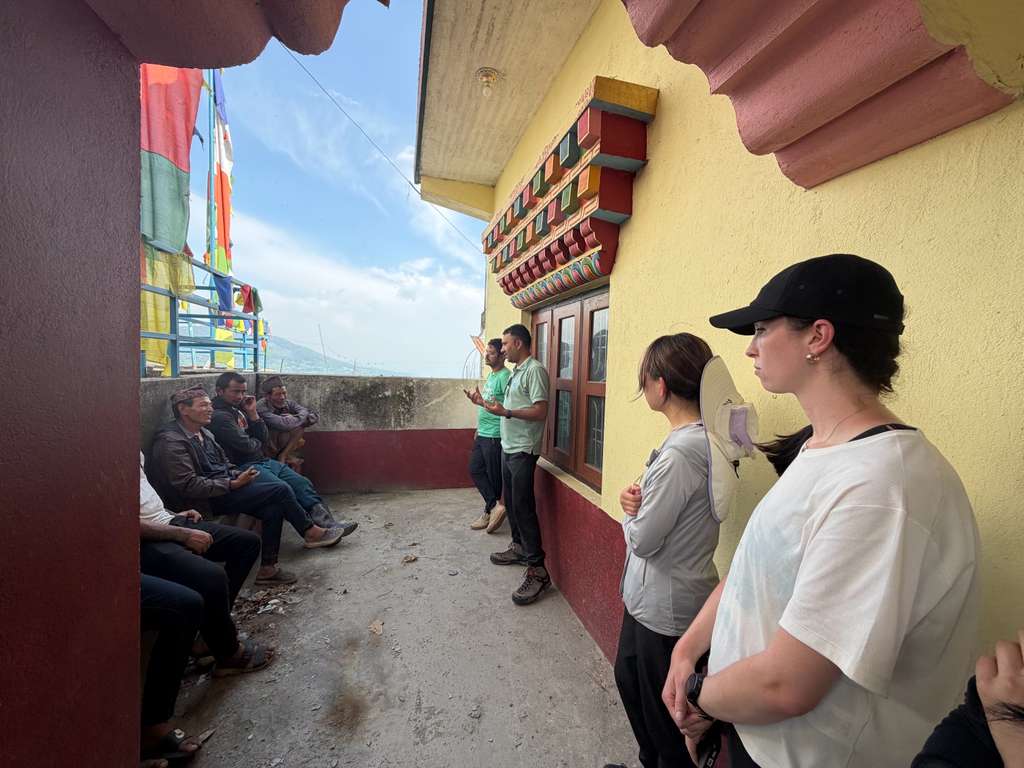
The Amayangri trek offers international medical students a chance to experience a side of Nepal that cannot be found inside a hospital or classroom. Set among the hills and mountain landscapes of Nepal, the journey brings students closer to local communities, traditional ways of life, and the natural environment that shapes everyday living in the region. For students joining a Travel With Purpose program, the trek is not simply an outdoor adventure added to the itinerary; it is an opportunity to slow down, observe, and understand how people live in places where the environment remains an important part of daily life. As students walk through villages and rural landscapes, they can see differences in housing, food, occupations, transport, and access to basic services, while gaining a more personal understanding of the communities they may otherwise encounter only during formal academic visits.
The journey also offers an interesting perspective on health and well-being. Walking through mountain terrain gives students an opportunity to appreciate the importance of physical activity, clean surroundings, access to natural resources, and the relationship between environment and health. Conversations with local residents can provide insights into family life, traditional practices, livelihoods, and the practical challenges faced by people living outside major urban centers. These experiences can encourage students to think about public health in a broader way and consider how factors such as geography, income, education, transportation, and access to healthcare can influence people’s lives. At the same time, the trek creates a different kind of learning environment. Students travel together, share responsibilities, adapt to changing conditions, and support one another along the route. These simple experiences can strengthen communication, teamwork, patience, and resilience—qualities that are equally important in medical education and professional practice.
One of the most rewarding parts of the Amayangri experience is the opportunity to step away from the pace of everyday academic life. Time spent walking through the hills, watching the landscape change, and meeting people along the way allows students to experience Nepal at a slower and more personal level. The scenery becomes part of the journey, but so do the small moments: sharing a meal, speaking with a local family, walking through a village or reaching a viewpoint after a long climb. These experiences often create a stronger connection with the country than sightseeing alone. For international students, the trek can also be a chance to build friendships with fellow participants and return to their academic activities with a fresh perspective.
Travel With Purpose sees experiences such as the Amayangri trek as an important part of international learning. Medical education is not limited to wards, laboratories, and lecture rooms; understanding people also means understanding their communities, surroundings, and everyday realities. The Amayangri trek gives students space to do exactly that while experiencing the landscapes and hospitality that make Nepal special. It combines adventure with cultural exposure and personal learning, creating a memorable part of a study tour that students can carry with them long after they return home.